Intel's weak outlook wipes out about $150 billion in value and drags chip stocks lower
The sell-off reflects doubts about how long PC demand can hold up as memory prices push system costs higher.
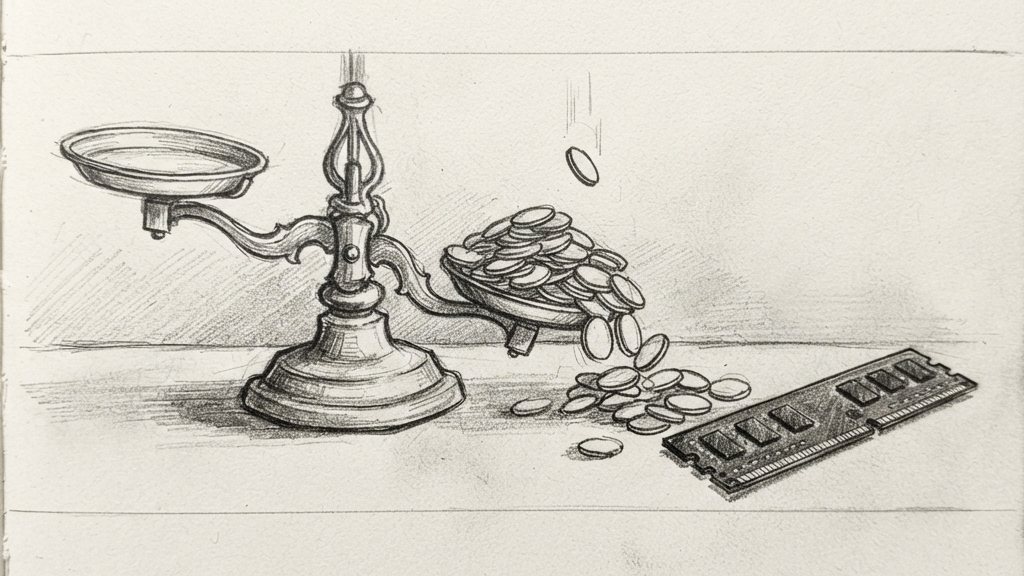
Intel shares fell roughly 28% to 30% on Friday, erasing close to $150 billion in market value, the largest one-day loss in the company's history, after it guided fourth-quarter revenue to $15 billion to $16 billion against analyst expectations near $17 billion. The weak outlook stemmed largely from its client computing group, whose third-quarter revenue fell 5% year over year to $8.1 billion as client processor shipments dropped 14%, and Intel expects PC demand to keep weakening into 2027 because higher memory prices are pushing up system costs. Intel also said gross margin would slip to 37% from 43% and that heavy investment would leave it with no positive cash flow. The sell-off spread across chipmakers and server and cloud companies, and by one intraday estimate roughly $1 trillion of semiconductor market value disappeared. The U.S. government's stake, acquired about a year earlier, lost around $12 billion in value, though the position remains up more than 70% for the year. Data center revenue grew 78% year over year, but Intel's capacity constraints mean it cannot fully capture that demand until new fabs come online, with the next Arizona fab not expected until 2028.
Why it matters
For PC buyers and the wider industry, the signal is that higher memory prices are likely to keep raising the cost of systems through 2027, with Intel expecting the client PC market to shrink about 10% over that period. Intel's data center business is growing quickly, but limited manufacturing capacity means it cannot yet serve all of that demand, so the company's near-term growth depends on its fabs coming online. Investors have responded by repricing the wider semiconductor sector, not just Intel.
Matters or hype?
Does this story matter, or is it hype? Vote before you see what everyone else said.